Tag: Profiles in Innovation

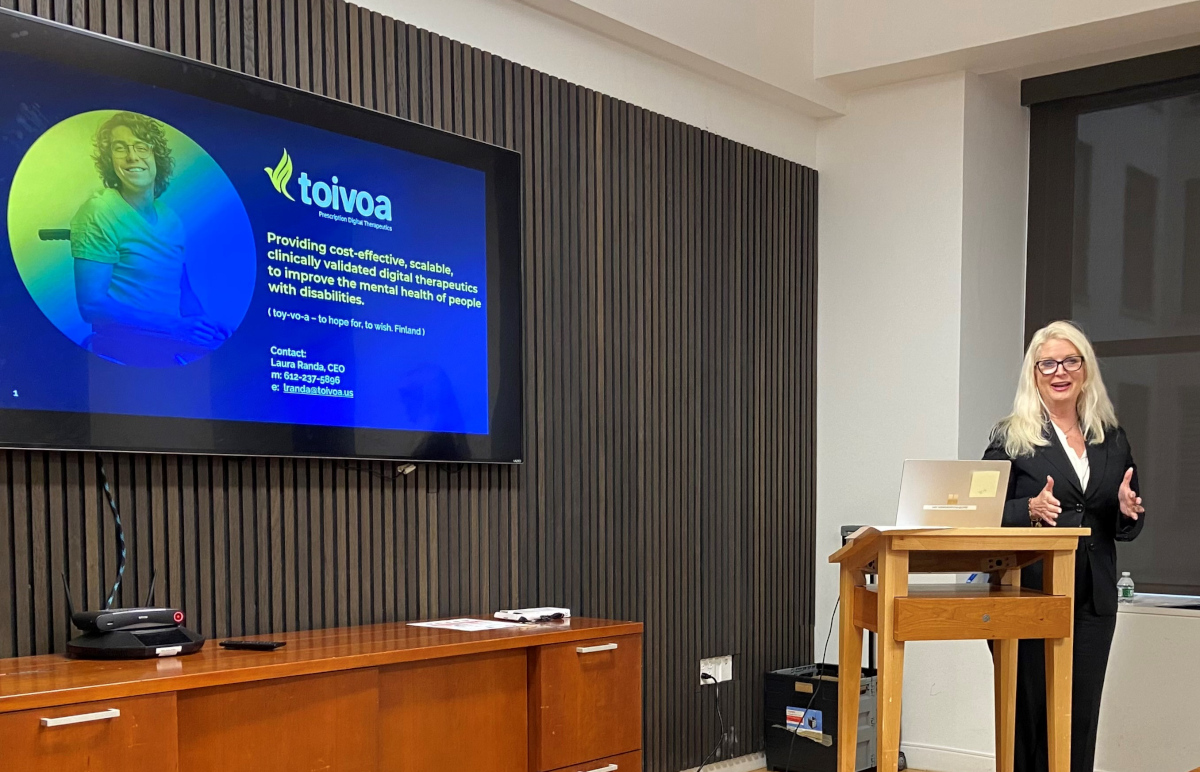
Laura Randa, CEO & Chair of Toivoa

Laura Randa, CEO and Chair of Prescription Digital Therapeutics Firm Toivoa

An Ongoing Series Highlighting Delaware Innovators


The United States is facing a severe mental health crisis that disproportionately impacts people with disabilities. It’s estimated that 54 million people with disabilities are suffering from mental health disorders and, according to the Centers for Disease Control, adults with disabilities say they experience frequent mental distress nearly five times as often as those without disabilities. But mental health services are often not easily accessible, widely available or affordable.

Laura Randa witnessed first-hand how her college-age daughter, who has hearing loss, experienced increased stress and anxiety while struggling to read lips during the COVID-19 pandemic, when face coverings were mandatory and clear masks weren’t available in most classrooms. Fortunately, Randa was in a position to help.

Laura left her 30-year career in commercial leadership and C-suite positions at biotech and pharmaceutical companies, including Regeneron Pharmaceuticals and Novartis, determined to revolutionize mental health treatment for people with disabilities. Assembling a passionate team of experts in cognitive behavioral therapy, digital therapeutics and clinical psychology, Randa started Wilmington-based Toivoa and its first-in-class digital therapy platform, Rauha, a platform designed to close the treatment gap for people with disabilities living with mental illness. The 2-year-old Wilmington-based company won $27,000 in the 2023 Startup302 competition, coordinated by Delaware Prosperity Partnership (DPP).

Toivoa, a Finnish word that means “hope,” is initially targeting its efforts for people with hearing and mobility disabilities and includes dozens of accessibility functions such as color contrast, closed captions, keyboard mobility and multiple navigational options. By the end of the decade, Randa expects to hire upwards of 1,000 people and have 1,300,000 patient users on the platform.

Initiated by a healthcare professional and accessed by a unique patient code, the Rauha app provides fully-accessible, cognitive behavioral therapy – the gold standard of psychotherapy. Based on responses to a series of questions about their disabilities, patients receive adapted, personalized exercises and therapy from Dr. Samantha Gaiez, a New York City-based clinical psychologist with more than 15 years of clinical experience, and a team of psychologists specializing in people with disabilities. Every patient will be matched to a certified mental health coach who has shared living experiences with disabilities and mental illness. Together with a vibrant patient community forum, patients will receive personalized support and encouragement throughout their 12-week journey.

“We are on a mission to radically change evidence-based therapy for people with disabilities living with mental illness,” says Randa, who earned her master’s degree in public administration from the University of Delaware. “We look forward to bringing a high-growth digital therapeutic community to Delaware and collaborating with the county and state economic development teams to address critical health inequities in one of the most excluded and marginalized groups.”

Randa recently shared her thoughts on innovation with DPP.
Why is Delaware a great state to be an innovator?

I grew up in Delaware and have seen first-hand that Delaware is the home of innovative businesses, cutting-edge research and transformative ideas that are meeting and exceeding the challenges of the 21st century economy. Delaware has a large and robust ecosystem fueled by the spirit of collaboration across all stakeholders, especially government leaders, businesses and academic institutions. To successfully build an innovative digital therapeutic business in a globalized market, businesses need access to high-quality, high-tech and diverse talent. Delaware was a natural fit for Toivoa because the breadth and diversity of talent in the finance, tech, pharmaceutical and consumer industries offered in Delaware is unparalleled.

In your view, what qualities should a successful innovator have?

My father – my lifetime mentor, who was a long-time DuPont R&D researcher with 28 patents – taught me many things about being an innovator. He used to say you had to have five top skills to demonstrate as an innovator: associating, questioning, observing, networking and experimenting. These skills are fundamental when you are developing solutions to address a critical unmet need in a way that no one has ever done before. But this is just the start. As I have launched Toivoa, and throughout my career, I’ve learned that innovation is best realized by building passionate, purpose-driven, cross-functional teams and leveraging mentors who can help you “slow down, to speed up.”

What advice would you give innovators just starting?

A great entrepreneur must become an expert in their market by digging deep to understand the nuances of how innovation can have the greatest impact and make a meaningful difference. You must push yourself to continuously challenge the status quo and be open to ideas outside of your comfort zone and realm of expertise. I’ve learned that this is not just a key entrepreneurial skill, but also a very valuable life skill. Take the time to create company and product positioning and value propositions that are simple, clear and concise and that resonate across your key stakeholders. Test your concepts and products with your stakeholders at every step along your development path. Investing your time and efforts in these processes will help you build high-impact, focused communications and strategies, let you stand out in a crowded innovator market and accelerate your success.

Newsletter Sign Up

Stay Up To Date With Delaware

Continue reading

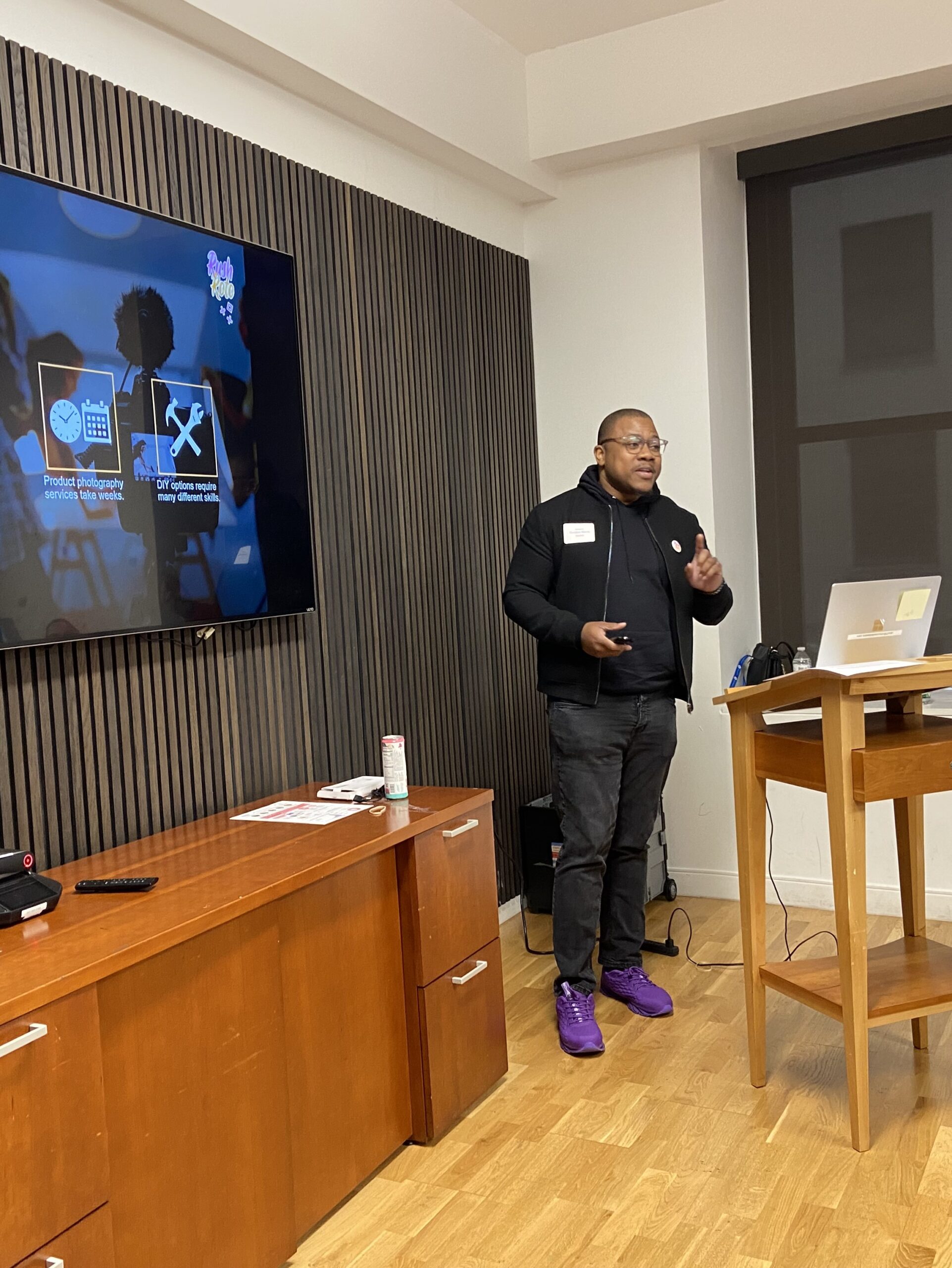
Christian Morris, Founder/CEO of Rush Roto

Christian Morris, Founder and CEO of Product Photo A.I. Firm Rush Roto

An Ongoing Series Highlighting Delaware Innovators


Christian Morris was working on a mixed-reality app that would allow users to view a musician or performer as if they were 3D in front of them and needed software that could cut the background out and leave just the subject. Despite a lukewarm response from people who reviewed it, he believed it had potential.

Enter his wife, who runs a successful Etsy shop but needed an inexpensive way to create product videos. With a few tweaks, the app helped propel her to the top 5 percent of sellers in six months. Morris saw small business owners – particularly ecommerce sellers – who don’t have large ad budgets for Facebook or Google but depend on their own social media posts to sell products as an untapped market for his artificial intelligence-based technology.

Rush Roto’s “simple and spectacular” AI technology doesn’t just add a background. It places the picture of an object into another image that can be turned into multiple campaigns in just a few seconds. That’s important for small businesses that rely on seasonal online selling and want to turn a single product photo into images for Halloween, the Christmas season, spring — or any other time or theme.

Morris put about $10,000 of his own money into getting the startup to the point where he could apply to business growth programs. He found early support in 2022 through Amazon Web Services (AWS), which selected Rush Roto as one of 25 startups for its inaugural AWS Black Impact Accelerator. The company won $125,000 in cash and $100,000 in Cloud Credits along with in-person training at Amazon headquarters.

Morris says the AWS program and Rush Roto’s recent selection into the prestigious Techstars Accelerator Powered by J.P. Morgan program – which included Rush Roto receiving a $120,000 equity stake – has opened a new world of possibilities in terms of venture capital funding, growth and connections. In addition, Rush Roto was a winner in Delaware Prosperity Partnership’s 2023 Startup302 competition, where it placed in the Delaware Tech-Enabled category.

“Success in programs like AWS, Techstars and Startup302 provide legitimacy and help us get our funding applications looked at, which can otherwise be very challenging,” Morris said.

Morris recently shared his views on innovation in Delaware and the path forward for innovators.

Why is Delaware a great state to be an innovator?

I know other Delaware founders have said it countless times, but our central location is key. Getting started with zero network connections in the tech world was challenging. However, I was able to expand my network at an exponential rate with just new tires, gas and determination. I joined startup communities in not only Delaware, but D.C., New York City and Philadelphia. I was usually the only Delaware resident in the room. That made me even more memorable.

I just did another pitch competition where I came in second in New York just a few months ago. And another one where I was going down to D.C., so there’s a plus at being able to hit multiple cities without having to hop on a plane. I also save money by not needing to rent cars and purchase hotel rooms in those states. In other words, being here also extended my company’s runway.

Last and most important is the real effort to support innovators here. After being a finalist in the Start-up302 competition, we received a letter from Delaware Governor John Carney. I don’t know if any founder I’ve met can say their state cares about what they’re doing at that high of a level.

What qualities should a successful innovator have?

Number one, by a large margin, is grit. Startup life is difficult. It will almost always take longer and be more challenging than you expect. “Unfair” is the default setting. You must learn to make peace with it, and then make your own luck.

Number two, focus. Focusing on the “why,” not the “what.”

Three, vision. You need vision to shift your “how” and “when” if needed. The reason you took action should be your north star. It’s easy to get caught up in your solution and forget.

What advice would you give innovators just starting?

When you get started, one of the most important things is to pick an idea worth pursuing by you. Not just one that is worth pursuing. You should have a true passion for the idea, not just potential profits. Those profits don’t leave the “potential” stage with most startups. You need to have a love for the why. Rush Roto’s why is serving underfunded entrepreneurs. I founded Rush Roto with the goal of using AI to make photography affordable to all businesses, to give time and resources back to the struggling solopreneur. Seeing Rush Roto do that gives me the energy to push through those tough days.

Newsletter Sign Up

Stay Up To Date With Delaware
Continue reading

Liam Fitzgerald, Co-Founder of Connect2Co

Liam Fitzgerald, Co-Founder of Digital Workspace Firm Connect2Co

An Ongoing Series Highlighting Delaware Innovators


Liam Fitzgerald believes many businesses have a lack of cross-departmental clarity, an inability for executives to make strategic decisions and a lack of overall workplace morale. This belief led to the creation – with co-founder Robbie Parisius – of Connect2Co, which describes itself as “the future of productive work.”

“As a founder, my objective is to improve communication and collaboration, implement sustainable practices into companies of all sizes and drastically improve scalability in startups for fellow founders to reach their goals more effectively,” says Fitzgerald, whose company vision is to “transform the digital workspace into something that is engaging and meaningful, data-driven and efficient.”

Connect2Co won a 2023 $100,000 Encouraging Development, Growth & Expansion (EDGE) Grant from the Delaware Division of Small Business to support the growth of a business-to-business platform that enables businesses of all sizes to manage, optimize and collaborate with other companies. The tool essentially enables customers to operate a digital workspace from one central location, eliminating the need for toggling between various applications such as Gmail, Google Drive, Microsoft OneDrive and Salesforce.

Fitzgerald spoke to Delaware Prosperity Partnership about his views on innovation in Delaware and his advice to hungry innovators.

Why is Delaware a great state to be an innovator?

Delaware’s ecosystem of entrepreneurs and business professionals – and government entities driven by their ability to support small businesses and systems by providing access to vital resources and people – make Delaware a “Goldilocks zone” for innovation and innovators alike. Small businesses account for more than 98% of the businesses in Delaware, employing over 55% of the workforce. This supports the obvious presence of a breeding ground for entrepreneurs to provide value to each other in a multitude of ways.

In your view, what qualities should a successful innovator have?

  • Successful innovators have core qualities that define their success:

  • Understanding in the form of malleability. The presence of individual identity should not supersede an entrepreneur’s ability to listen to others in relation to feedback, criticism and support. Innovators must be sure in their mission and overarching objective but must simultaneously be willing to change course and pivot as their business or venture progresses. Communication and understanding are vital to improvement. Even if feedback is not used, shared perspectives give clarity to beautiful ideas and ventures.

  • Innovators must be leaders. Successful entrepreneurs and thinkers have different personality types. Some can lead in a school of thought, industry or field. Some are great managers who can realize the dormant abilities of their team and empower them to excel personally and within their organization. Some lack these qualities, but lead in their relentless persistence, drive and hunger to solve problems and create/offer solutions. Ideally all three leadership qualities should be evident in the perfect leader, but the third quality (persistence) will inevitably allow them to penetrate the market and achieve the other two qualities.

  • Innovators must have ideas or systems that are better than those that previously existed. This may be evident in the form of improvement to solutions, products and systems that already exist; innovative and cutting-edge solutions/products or services that do not exist; or the enablement of team members to realize their full potential and, in turn, bring their ideas to light. The ability to execute on these ideas is what differentiates thinkers from doers.

What advice would you give innovators just starting?

  • Understand your why, then your what, then your how. Figure out your purpose for your venture, then what you will offer and then dissect how you will fulfill what you will offer.

  • Plan with the objective to execute. You can write business plans, forecast your expenses and your revenue, create feasibility analysis and research statistics on your market, industry and customers, but nothing will come close to talking to your target customers. If I analyze what I did wrong and right, I can truly say that the best practice is to find an idea, talk to people you trust to establish preliminary validity of the idea, build part of the idea and start showing it to these people and getting users to test it.

  • Rinse and repeat this process incrementally, and your idea will grow into a tangible thing. Your customer/communication base will also increase. Creating or building something people want enables you to figure out if an idea is worth pursuing. This should be done in a way that the person/group you are targeting is so compelled by the product that their want becomes a need. Turning wants into needs creates urgency and encourages retention. This, however, depends highly on the target market and customer segment you are selling to. Luxury goods are attractive due to their exclusivity and scarcity – taking advantage of the want factor. Commodity goods like toothpaste and soap are attractive due to their necessity. Services offered, solutions developed or products created, however, can initially be something the consumer wants that, after use, makes them realize they need it (such as iPhone, Gmail, CRM Systems).

Newsletter Sign Up

Stay Up To Date With Delaware

Continue reading

Patrick Callahan of LabWare

Entrepreneur Patrick Callahan, Head of Data and Analytics for LabWare

An Ongoing Series Highlighting Delaware Innovators


LabWare’s acquisition of Patrick Callahan’s CompassRed data analytics firm in February 2022 started with a chance first encounter between Callahan and LabWare President and CEO Vance Kershner and Callahan at Buckley’s Tavern in Centreville.

“Developing a relationship with Vance is the perfect example of things that happen in Delaware that just don’t happen anywhere else, in my opinion,” Callahan said. “We met over a bar stool.”

Callahan built CompassRed into a visionary company in machine learning and predictive analytics. As head of data and analytics at LabWare, he is now developing a dedicated advanced data analytic arm as part of efforts to elevate the company’s position as the global leader in the laboratory information management market.

Previously, the Drexel University and Widener School of Law graduate was a founding partner of The Archer Group. The award-winning, interactive internet marketing firm, founded in 2003, serves a diverse roster of clients in the financial services, retail, pharmaceutical and entertainment industries – including numerous Fortune 500 clients.

Callahan also serves on the boards of several Delaware organizations. These include the Delaware Data Innovation Lab, the Pete du Pont Freedom Foundation, Girls on the Run and Delaware Prosperity Partnership.

He spoke with DPP about innovation in Delaware and what it takes to innovate successfully.

Why is Delaware a great state to be an innovator?

I’m sure we’ve heard this a million times, but the accessibility to me is the big thing. If you’re looking to be in one of the best labs or chemical spaces, you can drive 40 feet and find people who are customers, thinkers, funders and legislators. There’s a reason why we have the biggest banking, biggest chemical companies and a lot of the other things right here in the Northeast corridor. When people talk about what made the country great, you can see that diversity here in the state – socioeconomic levels, education levels, diversity of thoughts and backgrounds.

How I met Vance is a great example. You couldn’t just go to San Francisco and get a meeting with founders like Reid Hoffman (LinkedIn), Mark Zuckerberg (Facebook) or Marc Andreessen (Mosaic, Netscape). You just don’t go to a restaurant, introduce yourself and then strike up a conversation there. That’s unheard of.

In your view, what qualities should a successful innovator have?

I think humility is one thing. If you’re humble, that means you’re always learning, you’re always trying to figure out things, and you’re always knowing you don’t have the answer. People who say, “I know the answer,” are the ones who nine times out of 10, don’t. Getting out there and meeting people is very, very important if you want to sell your product or address the problem that you’re trying to address. That could be over Zoom or in person, but curiosity about another person’s view and experiences is just so important. Expanding what we’re doing at LabWare requires me to get to know the customers in the labs and the end user of the product.

Intellectual curiosity and the willingness to listen to someone no matter how different they are is something you can learn and build into your product and innovate.

You can do that over Zoom. We’ve shown over the last two years that’s essential, and maybe even easier. Before COVID, we’d have meetups where only 30 or 40 people would show up in person. But during COVID, we’d get hundreds of people from all around the world, which would lead to follow-up calls. I don’t know if we’ll go back. We want to have a mixture of both because there are things you can learn on the side before the meeting.

What advice would you give an innovator who’s just starting?

First, go meet people, go to these meetups. Many are free, but I find myself asking if someone will spend $1 on it. To me, that is a good qualifier because if you give it to them for free, they won’t necessarily assign value to it. When we were doing these meetups, people would sign up but two-thirds of them wouldn’t show up. The minute we started charging $5 and giving the money away to a nonprofit, really engaged people showed up because they thought of it as value. If you’re providing value, you should get value back for it. It’s not just time.

Second, follow your interest. Doing good is good for business. I feel passionate about Girls on the Run, but speaking at a networking event also landed Archer one of our largest clients. Don’t go into it thinking you’re going to get something out of it. Be genuine, but give back to the community – and encourage your team to do the same — and I’ll tell you, you’ll get it back tenfold. There are so many nonprofits in Delaware that do so many good things that you’ll meet your next customer, hear about the next important problem that you can help solve or just meet someone with a different perspective that will help you back at the office.

Newsletter Sign Up

Stay Up To Date With Delaware

Continue reading

Jalaal Hayes, Ph.D., Founder of Elyte Energy

An Ongoing Series Highlighting Delaware Innovators


At 22, Dr. Jalaal Hayes made Delaware State University (DSU) history as its youngest doctoral degree candidate. The native of North Philadelphia earned this honor in 2015 by successfully defending his thesis “Thermodynamic and Kinetic Studies of Alkali-Metal Doped Lithium Amide-Magnesium Hydride Hydrogen Storage System.”

He then taught in Philadelphia for the Universal Companies and Cristo Rey Philadelphia High School for nearly two years in pursuit of his teaching mission to make science, technology, engineering, arts and mathematics (STEAM) simple. He spent the following two years as a visiting assistant professor of physical chemistry at DSU and then was an assistant professor of chemistry at Lincoln University for almost four years.

In 2020, Hayes founded Elyte Energy, a Dover, Delaware-based clean-energy company that uses patent-protected hydrogen technology to build a highly efficient power supply for fixed and portable devices. The startup won an Encouraging Development, Growth and Expansion (EDGE) Grant from the Delaware Division of Small Business in 2021. The grant helped fund laboratory space and equipment to develop a commercial prototype of Elyte’s hydrogen-based system, and the technology has application in the greater global vehicle market.

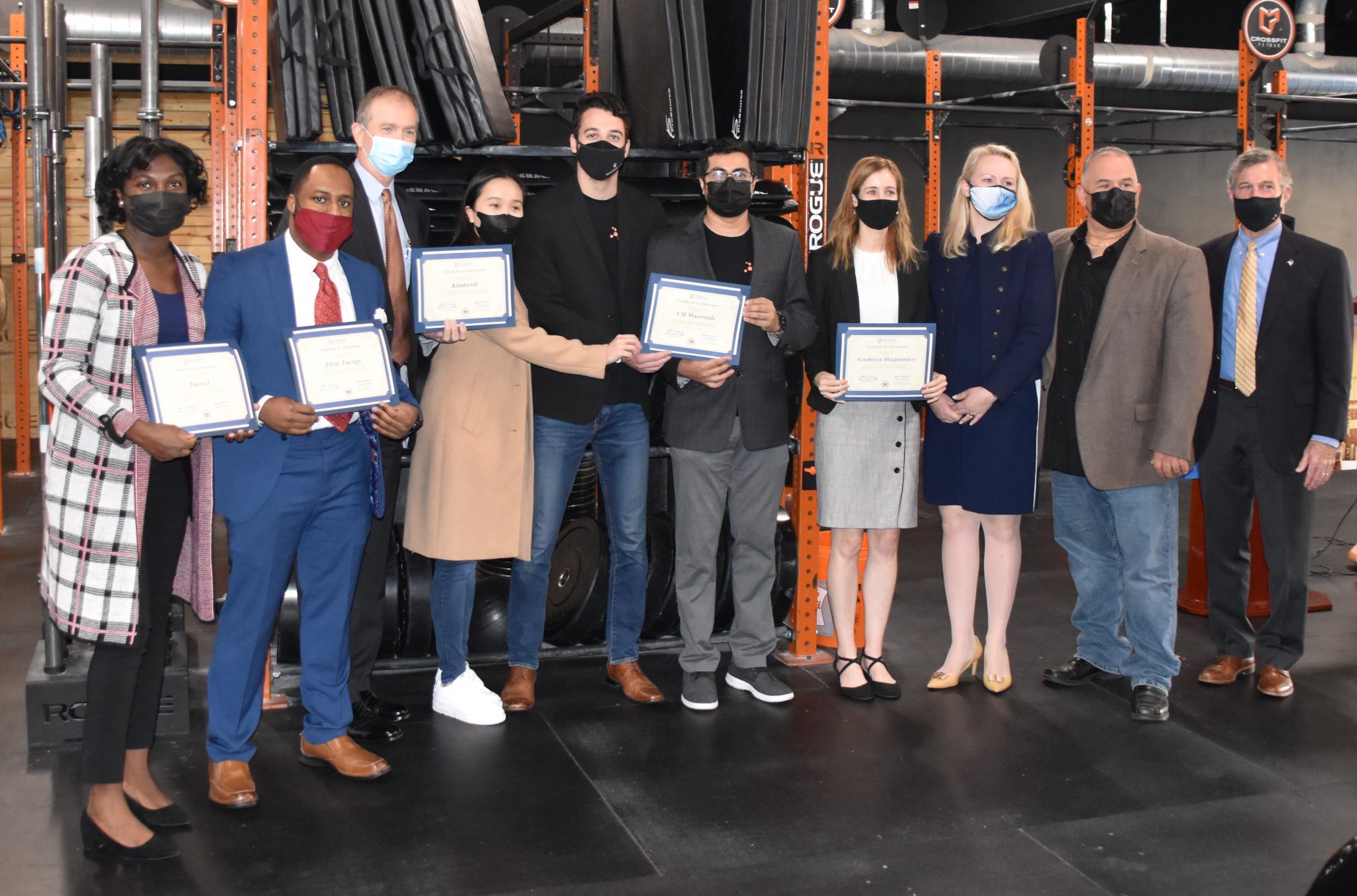
Dr. Jalaal Hayes, second from left, accepted a 2021 EDGE Grant for Elyte Energy during a ceremony with Governor John Carney in 2021.

Hayes previously founded Elyte Universal Network, a STEAM-based content entity that focuses on making difficult and complex sciences simple and accessible to all communities. He also has authored two books and spoken at numerous events, including TEDxWilmingtonSalon, delivering “The Chemistry of Community Building,” and the Innovative Applied Energy Conference held at the University of Oxford in England. In addition, he released a documentary about his journey to becoming the youngest applied chemistry Ph.D. candidate in America called “Exploding Dreams: A STEAM Story” in 2021.

Speaking with Delaware Prosperity Partnership, Hayes shared his views on innovation in Delaware along with advice he’d give to hungry innovators.

Why is Delaware a great state to be an innovator?

Due to the state’s cost-effective living and growth potential, economically and socially, Delaware is a great state to innovate, communicate and elevate the status quo of the country for generations to come.

In your view, what qualities should a successful innovator have?

Excellent communication skills, the ability to see and create the future and the ability to provide solutions and opportunities to their respective industries and communities – financially, socially, etc. Along with these qualities, you must be resilient and willing to learn and apply lessons fast in every trial and tribulation that comes your way that tries to block you from achieving your minimum viable product or even that first contract to pay for your idea. In addition to the qualities above, production, quality and speed are the keys to innovation, especially in our current times.

What advice would you give innovators just starting?

When discussing your innovation, be clear and concise on how your technology or idea can apply to specific problems and make things easier, better, faster or cost-effective for the overall “big picture.” For innovators just starting, draw or write out your idea and ask people if they would buy into it and why. You can start with friends, but you’ll need to ask outside your trusted group. If there’s a positive response, go for it and begin to build the most cost-effective product possible. Get a team or expert advisors to assist with every checkpoint along the journey. In addition, it helps to constantly check your technology readiness level for your technology as you gain more information and new results from each experiment and iteration.

How do you decide whether a new idea is worth pursuing or should be set aside?

You need to ask the following questions:

  • Is it the right time to solve this problem?
  • How many people can buy into the idea? Is it greater than 100 people? If so, go for it. If not, what is next?
  • Are you willing to disrupt the status quo for the greater good?

Once you answer these questions and the answers indicate that you are ready to move forward, begin setting up SMART (specific, measurable, achievable, relevant and time-bound) goals for the development of the project.

Newsletter Sign Up

Stay Up To Date With Delaware

Continue reading

Theresa Litherland of Resonate Forward

Theresa Litherland, Co-Founder and President of Resonate Forward

An Ongoing Series Highlighting Delaware Innovators


When assessing if a new idea is worth pursuing or should be abandoned, Theresa Litherland looks at whether the idea needs a new business model.

“It’s all about keeping close to the customer need and how the product or service will fit that need,” she says. “It also depends on the innovator’s mission: Is it to be a millionaire or is it to make an impact? If you can’t find a business model or idea that fits your own personal mission, you should abandon the idea or change the business model.”

Litherland received her bachelor’s degree in chemical engineering from Texas A&M University and then went back to school 15 years later to earn her MBA in entrepreneurship from the Alfred Lerner College of Business & Economics at the University of Delaware.

She’s spent the past two decades at AstraZeneca, starting with leading a team that built eDetailing, eSampling and Key Opinion Leader extranets across multiple countries and continued with innovative packaging, Connected Devices and Commercial Innovation – an effort that resulted in winning multiple marketing excellence awards for her pioneering work in that area.

Litherland has led Resonate Forward – which has the challenging goal of delivering breakthrough medical device technology for people with Parkinson’s disease – for the last seven years. When she met co-founder Dr. Ingrid Pretzer-Aboff at the University of Delaware and saw the clinical data on an early version of Resonate Forward’s device, “I knew that I needed to be a part of bringing this technology to market because it could make such an impact for people with Parkinson’s.”

Resonate Forward was a 2021 STEM Class winner in the Delaware Division of Small Business Encouraging Development, Growth and Expansion (EDGE) Grant program. The company also placed first in the Life Sciences Category and was a Blue Hen Prize winner in the Delaware Prosperity Partnership (DPP)-led Startup302 competition in 2022.

Whether for Resonate Forward or with AstraZeneca, Litherland’s inspiration is developing extraordinary patient experiences that deliver improvements in patient outcomes by building partnerships with leading healthcare systems, payers and startups. Speaking with DPP, she recently shared her thoughts about innovating in Delaware and what every innovator needs to succeed:

Why is Delaware a great state to be an innovator?

Delaware is a great state to be an innovator, especially in the sciences, because there are so many resources and established networks here to support new ideas, new businesses or any challenge. I’ve been able to tap into so many different resources and experts. We have partnered with the University of Delaware for research and engineering help, and there are opportunities for office space, lab space and clean rooms. I’ve worked with the Horn Entrepreneurship program for legal expertise in the areas of intellectual property, grant writing and manufacturing. I’ve always found that with the close networks in Delaware, everyone is very willing to help and is also willing to leverage connections in Philadelphia, Boston, D.C., and New York. If you can’t find an answer to a question or resource someone can usually connect you with an expert close by.

The Delaware networks welcome and support new businesses and new members with tangible resources, including the Delaware BioScience Association’s bi-monthly BioBreakfasts, the Delaware Innovation Space at the DuPont Experimental Station, the Horn Entrepreneurship center, UD’s STAR Campus, the Small Business Development Center and the state’s EDGE Grant program. These programs bring together people, knowledge and resources from large established science businesses with undergraduate and graduate students looking for new opportunities and startups and growing business to build networks that help you solve multiple challenges and identify areas where you can strengthen your business.

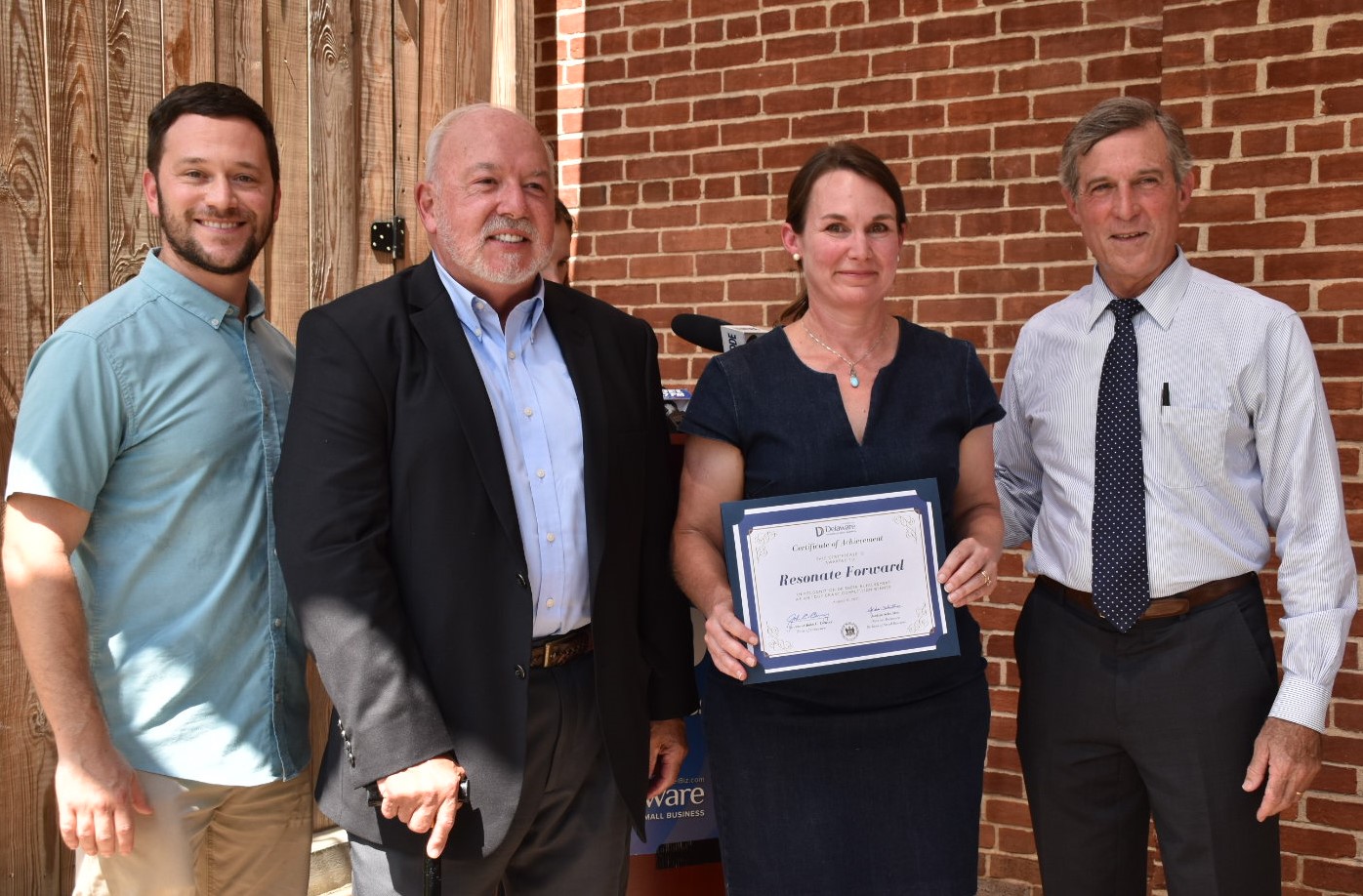
John Rabolt and Theresa Litherland accept a 2021 EDGE Grant for Resonate Forward from state Representative Jeff Spiegelman and Governor John Carney.

What qualities should a successful innovator have?

Successful innovators need:

  • Optimism and grit to stay the course they know is right, even when others tell them their idea is crazy or won’t work; when they’re sitting alone working tons of hours to meet a customer demand; or when it feels like there isn’t a way forward.

  • Passion for the customer they are trying to serve as their North Star.

  • Flexibility to go in new or unexpected turns to survive pandemics or find a new business model when the first one doesn’t work.

  • Humility and smarts to hire a team or find business partners that can balance their weaknesses.

  • Persistence to get you to your goals.

What advice would you give innovators just starting?

If you encounter a challenge you can’t solve, reach out for ideas. You will be really surprised at who will offer help and support.

Talk to your customers often and keep good records of their feedback, whenever you need a little inspiration or direction, go there first.

Partner with people who have different views and different skills, so you don’t need to carry the full burden of a new idea on your own.

Prepare. This may take much longer than you expect but appreciate the journey. I’ve learned more than I ever expected, I’ve been able to do more than I ever expected and I have met many amazing experts who have guided me.

Newsletter Sign Up

Stay Up To Date With Delaware
Continue reading

Cora Castle of OmniPotential Energy

Cora Castle, Founder and CEO of OmniPotential Energy Partners

An Ongoing Series Highlighting Delaware Innovators


Considering Delaware’s status as a state where innovation prospers, Cora Castle begins by quoting late U.S. Supreme Court Associate Justice Louis Brandeis, who is credited with saying “states are the laboratories of democracy.”

The founder and CEO of Wilmington-based OmniPotential Energy Partners says the quote suggests it is “difficult, dangerous or both to make broad changes without evidence that they produce the anticipated benefit. This sentiment is equally applicable to new economic activity, products and services as it is to innovative legislation or new governing principles.”

The 1995 graduate of the University of Delaware’s electrical engineering program leads a company committed to a world where practical and cost-saving electrical vehicle (EV) ownership does not require a garage or high-income zip code. OmniPotential’s approach to EV charging works for all communities regardless of parking style, and its decision to not charge for its Curbstar hardware or installation makes home EV ownership a great choice for underserved communities.

OmniPotential, a winner in last year’s Startup302 pitch competition for ventures with underrepresented founders and one of Technical.ly’s 2023 RealLIST Startups, developed the Curbstar publicly shared residential charger in 2020. Castle subsequently helped pass Delaware Senate Bill 187, which requires large municipalities to issue permits for the installation of EV charging stations, in 2022 – a great first step for a company entering its commercialization phase.

Castle recently discussed innovation in Delaware with Delaware Prosperity Partnership and shared her advice for budding and current entrepreneurs.

Why is Delaware a great state to be an innovator?

Size matters. Delaware is a comfortably sized laboratory where ambitious projects can be undertaken, even (perhaps especially) if they require legislative action. OmniPotential’s mission is to shift the entire EV fueling paradigm for day-to-day charging away from unfair and inconvenient public charging to one of ubiquitous, fair, convenient and affordable home charging for everyone. This is a heavy-lift mission, with both product and public policy facets. It is impossible for me to imagine a state besides Delaware where I could have expected to get a state legislator to seriously consider my proposal, much less pass it with a bipartisan supermajority with no prior advocacy, legal or legislative experience more substantial than YouTube videos and “Law & Order” reruns.

In Delaware, a good idea needs less overall signal boost to distinguish itself from background noise and competitors. In particular, if your innovation is reliant upon a shift in public policy, Delaware is uniquely suited for your work.

In your view, what qualities should a successful innovator have?

Passion, confidence, patience and ego.

  • I cannot imagine a more valuable quality for innovative success than an inextinguishable passion for what you’re doing. Until and unless your business becomes commercially successful, the only payout you’re likely to receive is the satisfaction of moving one more inch up the field. You really need to care about your subject matter more than commercial success.
  • Confidence (bordering on fearlessness) is, anti-intuitively, more important to successful commercialization than product quality. Both are important, but if you want to move your product or service out of your garage, you need confidence.
  • As for patience, just know that you’re in for a long road trip filled with random landmines of things you never considered when your journey began. It is audacious to think that willpower and creativity alone will ensure your idea or company one day wins grants, receives headlines or signs customers.
  • Self-doubt and imposter syndrome will interfere with your ability to process your success. You will need a healthy ego to process these feelings. Accept your success and traction at face value. Take bows when you can and always remember to clap for your entrepreneurial peers when it’s their turn to win awards. Remember that you may reapply next year for the grant you didn’t win this year.

If you aren’t passionate and confident about a new venture you’re considering, I would wait for another opportunity.

What advice would you give innovators just starting?

  • Get out of the office. Go meet interesting people who support you and your mission. Join the a chamber of commerce, go to events, attend town halls, do it all. You can’t succeed from behind a desk.
  • Don’t trailblaze when you don’t have to. Read the blogs and press releases of area startups that are showing success. They have laid a trail for you to follow. What awards, grants and recognition have they won? Do the same things.
  • Look for deep insight. Research your area of interest deeply. Spend six months in your area of interest reading the top 10 stories every day and collecting the top 10 headlines every week. Make a word cloud on those headlines. Find the problem in the cloud. When you think you really understand the root cause of the problem, solve it. If you can’t find the satisfaction in this kind of research on a topic you’re passionate about, then entrepreneurism will be a challenge for you.
  • Validate your understanding. Talk to 100 people you believe might give you money to solve the problem. Ask each of them 10 questions focused on assumptions that can destroy your conclusions about the problem or solution. Do not lead the respondents to their answers! Record the answers. This insight will save you a lot of money and years of your life.

Newsletter Sign Up

Stay Up To Date With Delaware

Continue reading

Rob Herrera, Founder of The Mill Co-Workspace

An Ongoing Series Highlighting Delaware Innovators


According to Rob Herrera, the most important step for innovators is the first one.

Herrera says he doesn’t see himself as an innovator – yet – but as the founder of The Mill co-workspace, he has certainly made it easier for innovators to be successful.

“I’ve been fortunate to be in close proximity to a lot of really successful ones,” said Herrera, whose community involvement includes serving as a member of the Delaware Prosperity Partnership Board of Directors.

He notes that innovators share qualities that include:

  • Resilience. “When obstacles arise, an innovator sees it as a puzzle to be solved versus a barrier to success. That leads to a certain resilience of never throwing in the towel on a given idea or concept.”
  • Continual reflection. “Innovators tend to be ruthlessly introspective and always re-evaluate what they are working on. They are nimble enough to change their approach to a problem regularly. They tend to be humble in the face of new information. Bending reality to benefit yourself can be helpful at times, but not in every single situation.”
  • Balance. “My favorite innovators always find the right balance between being wildly creative and analytical at the same time. Innovators can lean one way or the other, but they also respect and are able to gel creative thinking with pragmatic processes – or at least know when to trust in someone who complements their skill sets.”

Herrera’s background is in architecture. He started his career with the New York firm of Perkins Eastman and then worked as an architectural consultant for two years with WeWork, the largest U.S. co-working company. Midway through the WeWork experience, he returned to Delaware to launch the first of two Mill locations. He continues to participate in other real estate and development projects in and around Wilmington, including the renovation and management of Theatre N in the Nemours Building, development of Faire Café, Girard Craft & Cork and several residential apartment buildings.

Herrera took time from his work to share why he believes Delaware is the First State for innovators and what it takes to be successful.

Why is Delaware a great state to be an innovator?

Delaware has the diversity, talent and access to decision-makers that is required to really get a business up and running. The state’s cost-of-living trends lower than any other areas in the region while still being in close proximity to New York, Washington, Baltimore and Philadelphia. I am certain I would not have had a successful career if I tried to build my business in a different market.

What advice would you give innovators just starting?

Do just that: Start. Sometimes that is the hardest part. Then, I would find a strong mentor to work with, someone to hold you accountable to your own goals. Mentors have taken me really far in my career. Learning from others’ mistakes helps avoid so many potentially painful situations and scenarios when starting a business.

How do you decide whether a new idea is worth pursuing or should be set aside?

I am just starting to figure this one out for myself. I have a bizarrely unique set of scars that have come from pursuing ventures I had no business pursuing. For me, it is always about the talent involved. If I have the right team in place to accomplish a particular idea, I almost always go for it. These days, I also factor in “time” as a major cost toward a new idea. I used to not value my personal time when deciding to pursue a new idea. I also factor in whether I am passionate about an idea or concept before pursuing it. There are ideas I’ve chased for financial gain only, and in almost every case I found that I really regretted doing those deals years later. I have never regretted the projects that I was passionate about and enjoyed doing. If you get that right, it feels less like a job and more like a fun project.

Newsletter Sign Up

Stay Up To Date With Delaware
Continue reading